
SMS vs iMessage vs WhatsApp: Choosing the Right Channel
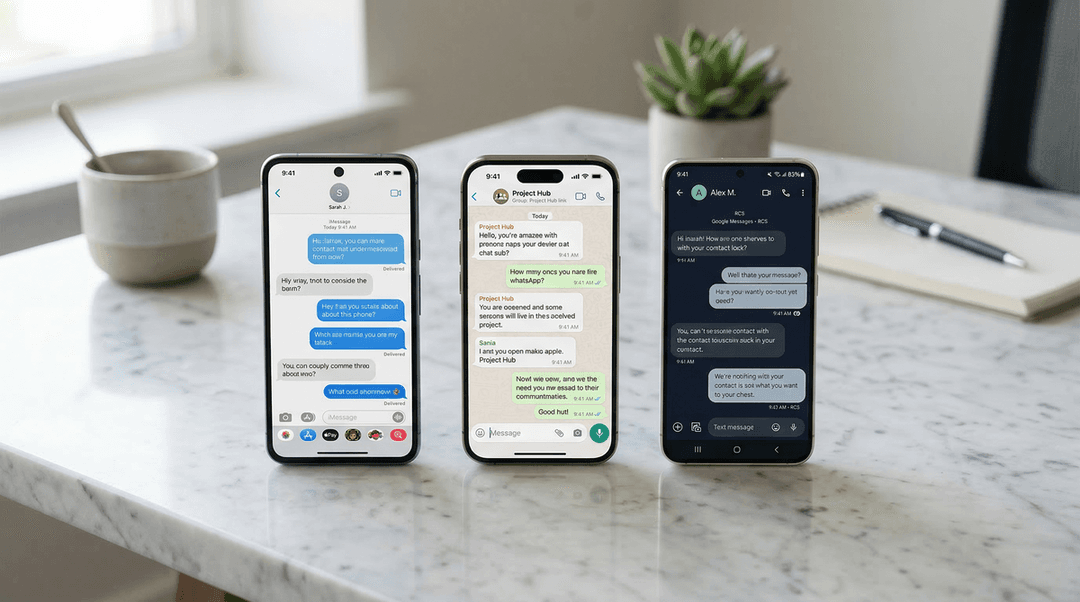
Three Channels, Three Very Different Experiences
Business messaging has fragmented into three major channels, each with distinct strengths. Choosing the right one — or the right combination — can mean the difference between 2% and 45% response rates. Let us break down each channel across the metrics that actually matter.
Reach and Coverage
- SMS: Universal reach. Every phone with a cellular connection can receive SMS. 5+ billion devices worldwide. The lowest common denominator, but it works everywhere.
- iMessage: 1.8 billion active Apple devices. In the United States, iPhone holds 57% market share, making iMessage the dominant messaging platform for US consumers. Limited outside the Apple ecosystem.
- WhatsApp Business: 2.7 billion monthly active users globally. Dominant in Europe, Latin America, India, and Africa. Minimal adoption in the US and Canada for business use.
Engagement Metrics Head-to-Head
This is where the channels diverge dramatically:
- Open rates: SMS 20% · iMessage 98% · WhatsApp 95%
- Response rates: SMS 6% · iMessage 45% · WhatsApp 40%
- Click-through rates: SMS 2.1% · iMessage 7.8% · WhatsApp 5.2%
Both iMessage and WhatsApp crush SMS on engagement. The reason is identical: they live in trusted, personal messaging apps rather than sharing space with spam and carrier alerts.
Compliance and Registration
SMS has become a compliance nightmare. In the US, you need 10DLC registration (which can take weeks), carrier approval for your use case, and ongoing content monitoring. Carriers actively filter A2P messages, and even approved senders see 10-15% of messages silently dropped.
iMessage bypasses carrier infrastructure entirely. No 10DLC, no carrier approval, no content filtering. You still need TCPA consent for marketing messages, but the technical barriers are zero.
WhatsApp Business requires Meta Business verification and pre-approved message templates for outbound messaging. Template approval can take 24-48 hours, and rejected templates need to be revised and resubmitted. Conversations outside the 24-hour window require template messages.
Cost Structure
- SMS: Per-message pricing ($0.007-0.02 per segment) + phone number fees + 10DLC registration fees. Costs scale linearly with volume.
- iMessage (via Blue Replies): Flat monthly plans starting at $99/month with generous message allowances. No per-message charges, no phone number fees.
- WhatsApp Business: Per-conversation pricing ($0.005-0.08 depending on conversation type and country). Free for user-initiated conversations in some markets.
The Winning Strategy for US Businesses
For businesses primarily serving US customers, the optimal stack is clear:
- Primary channel: iMessage via Blue Replies — covers 57% of your US audience with 98% open rates
- Fallback: SMS for non-iMessage users — Blue Replies handles this automatically with number lookup
- Optional: WhatsApp for international customers or specific demographics
Blue Replies's built-in number lookup detects whether each recipient uses iMessage. If they do, the message goes as a blue bubble. If not, it falls back to SMS automatically. One API call, maximum reach, optimal engagement for every recipient.
Making the Switch
If you are currently SMS-only, adding iMessage through Blue Replies is the highest-ROI improvement you can make to your messaging stack. The integration takes minutes, the engagement improvement is immediate, and the flat pricing makes costs predictable as you scale.
More from the Blog
iMessage vs Email: The Channel Your Customers Actually Check
Email open rates have cratered to 21%. iMessage delivers 98%. Here is why the smartest businesses are making the switch.
iMessage vs SMS: Why Blue Bubbles Convert 3x Better
Discover why businesses switching from SMS to iMessage see dramatically higher engagement, open rates, and conversion rates.
Blue Replies vs Twilio for iMessage: What Developers Need to Know
Twilio does SMS. Blue Replies does iMessage. Here is a developer-focused comparison of both platforms and when to use each.
iMessage for Real Estate: Close More Deals with Blue Bubbles
Real estate runs on relationships and speed. Here is how top-producing agents use iMessage to respond faster, build trust, and close more deals.